History
The 1956 plans for Backbone involved a site at "Tring" which was to be the southern terminal with "standby" branches to east and west. The map suggests it would also accept a television link from Highgate (diverging at Charwelton to reach Birmingham). By 1959 these plans had been revised, using Stokenchurch, with links west via "Swindon" and north via Charwelton. To the east a link ran north of London to "Ongar" (Kelvedon Hatch) via an un-named site assumed to be Pimlico. Another link ran to Museum exchange in central London (later to become the Post Office Tower).
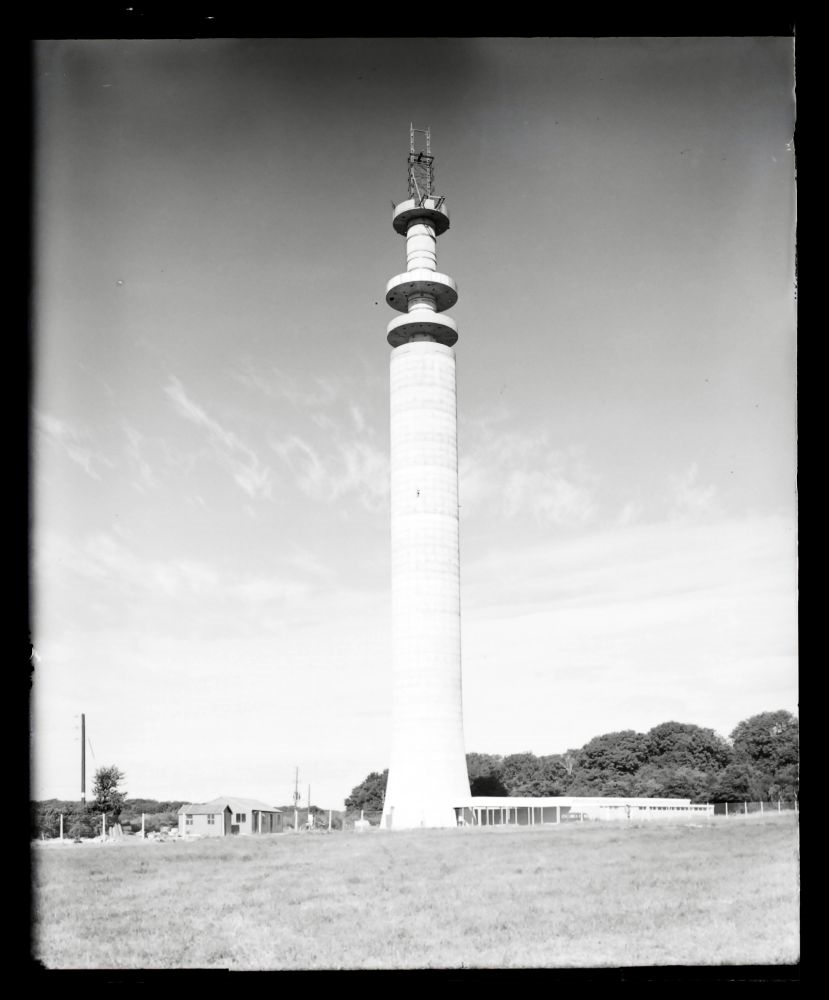
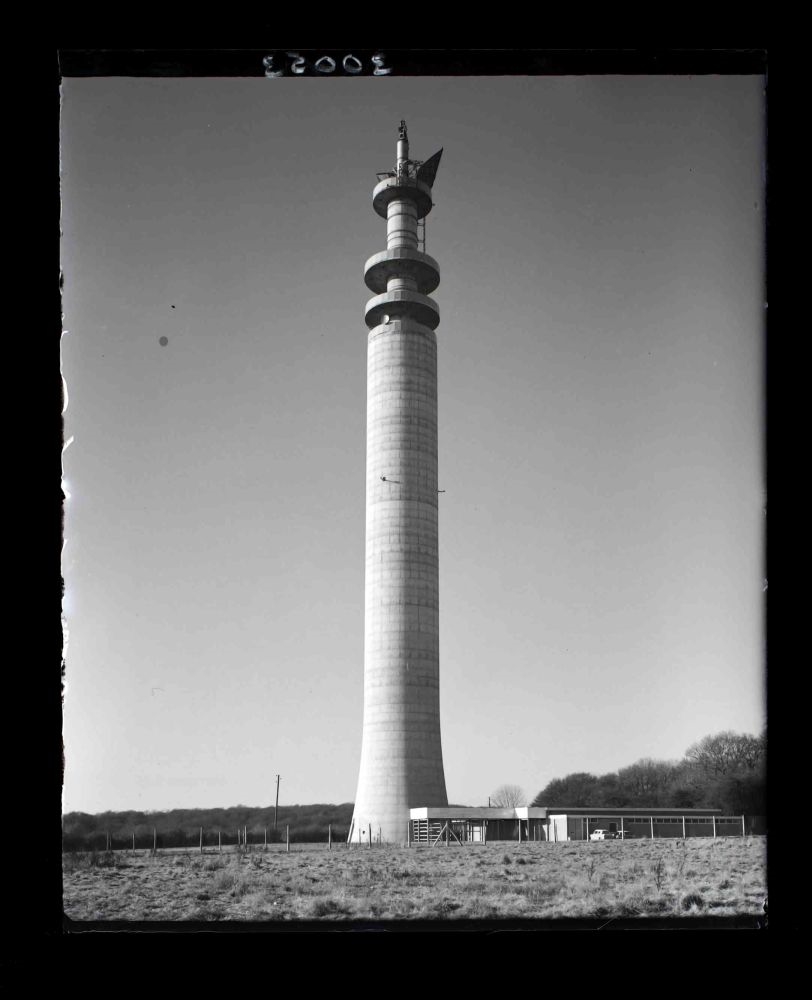
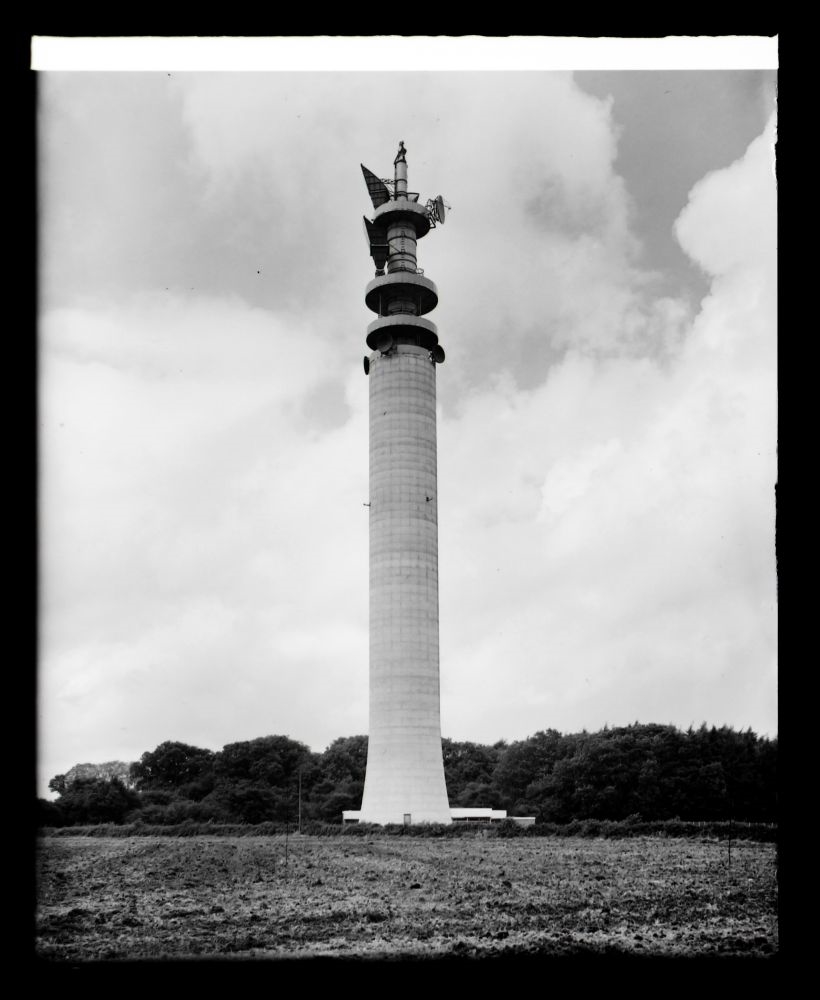
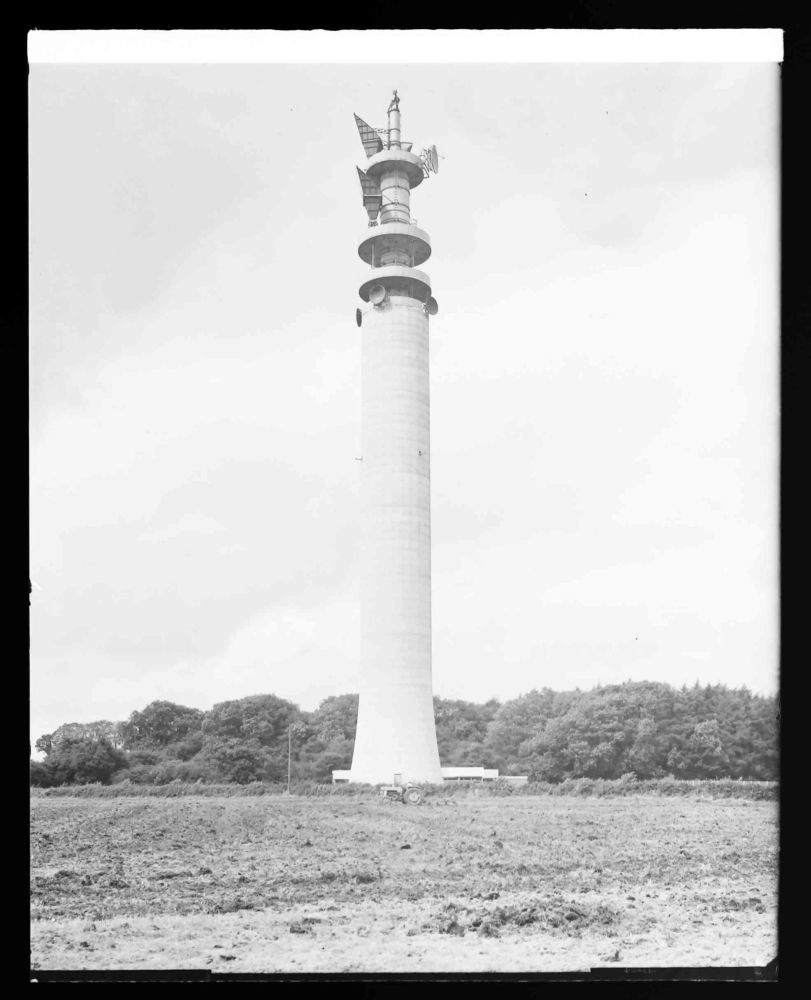
Post Office Engineer in Chief's Annual Reports refer to planning difficulties with the Stokenchurch (Kiln Farm) site however these seem to have been overcome by 1963 when the concrete tower was structurally complete. The first operational links would have been for Backbone: single horns were installed facing Charwelton and Sparsholt Firs with a dish towards Pimlico. Initially the main Backbone route used the (lower) 6 GHz band. antennas. Due to changes in longer-term plans for the overall network the link via Charwelton was later transferred to 2 GHz - a dish futher dish was installed and the horn subsequently removed.
A later change to the 1959 plan was to place Bagshot as the first "hop" from London on the routes to Southampton and Bristol. Due to delays, however, a 2 GHz link was provided direct from London to Stokenchurch. This faciliated the initial connection to Goonhilly. Pending completion of Bagshot the BBC2 link serving the Rowridge transmitter ran via Stokenchurch and a temporary installation at Golden Pot.
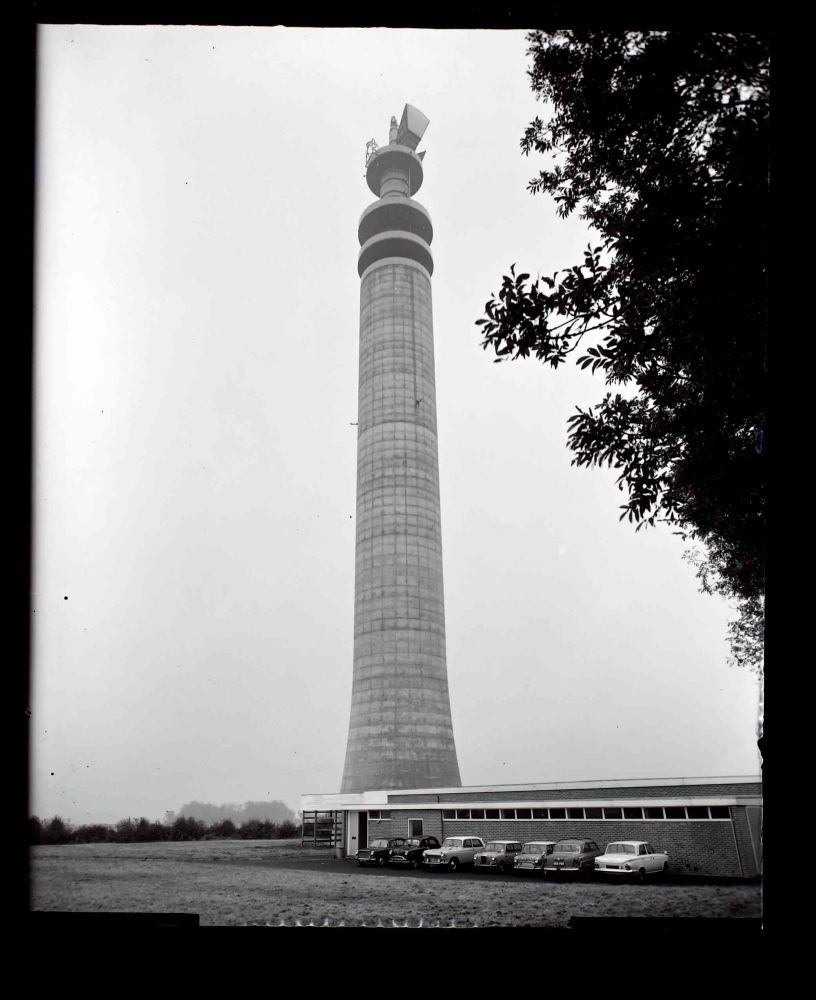
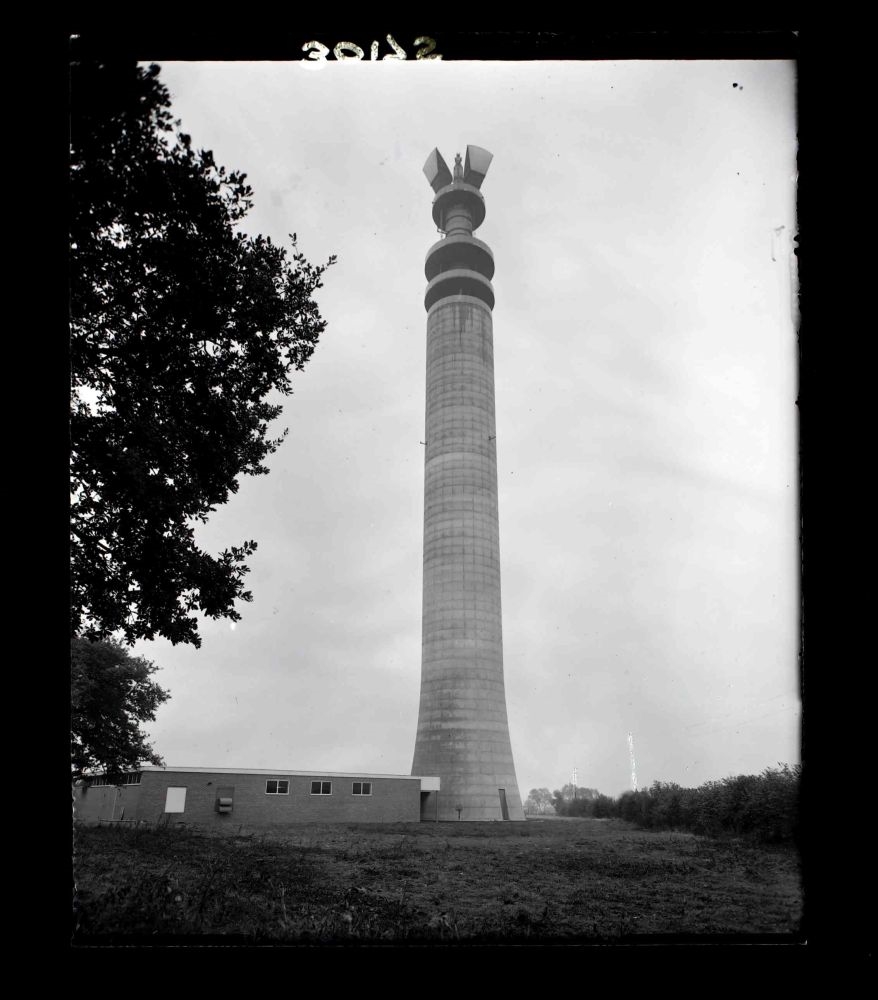
Although a POEEJ article in October 1967 suggested the work at Bagshot was completed a photo dated "1968" suggests the necessary horn antennas were still not in place at Stokenchurch. One oddity is the use of dishes for a 4 GHz link over the London to Bristol route: the horn design was capable of operation on that band. This may have been a side effect of contracts awarded to GEC and STC at different times with both companies appearing to prefer their own antennas, together with improved performance of the dish design during the 1960s.
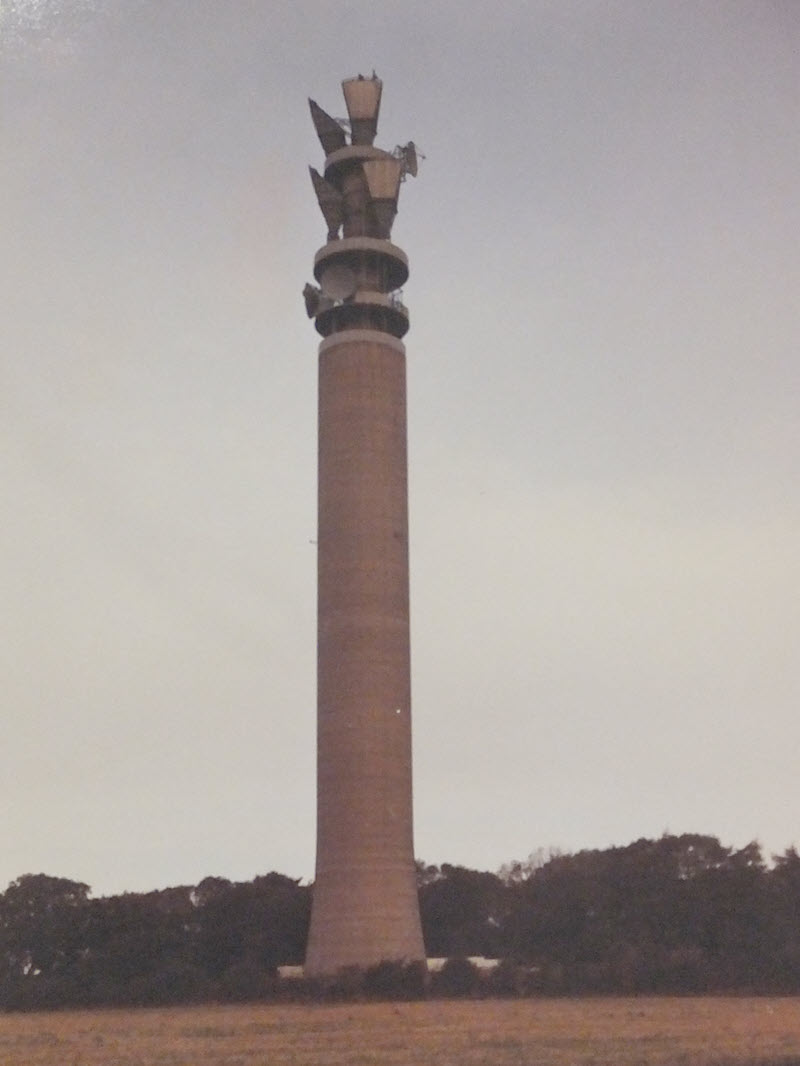
In later years further dishes were added for the main route London to Bristol route and digital systems were introduced in the 1980s. There was no requirement for additional capacity over the Backbone links to the east and north. The temporary links to London and Golden Pot were removed by the late 1960s but routing via Bagshot restricted the capacity of the Bristol and Southampton routes - traffic for both had to pass over the same link to London. Network diagrams relating to international traffic suggest some circuits were via SHF west of Stokenchurch but continued via cable to London. The Backbone links closed in 1989 however the large dishes for the main route remained until around 2009.
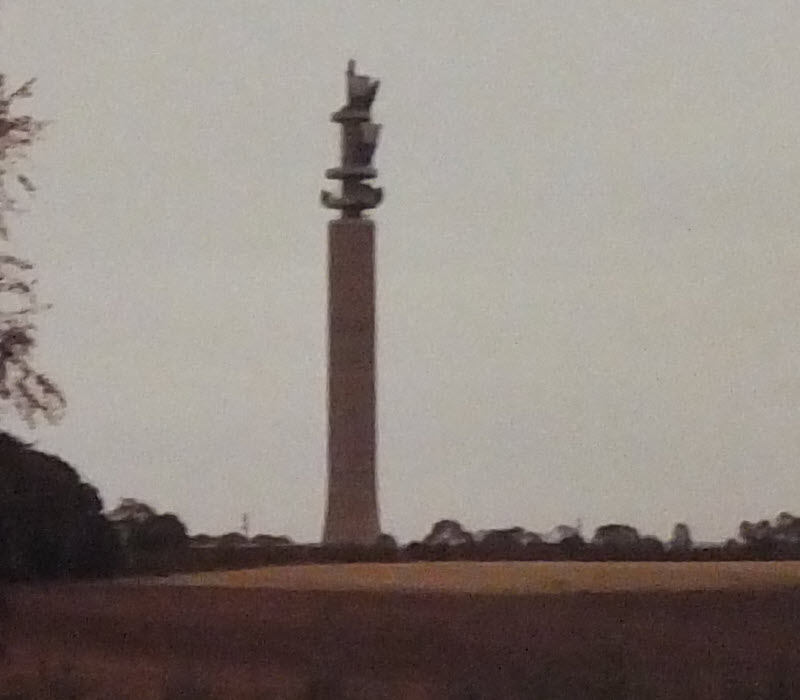
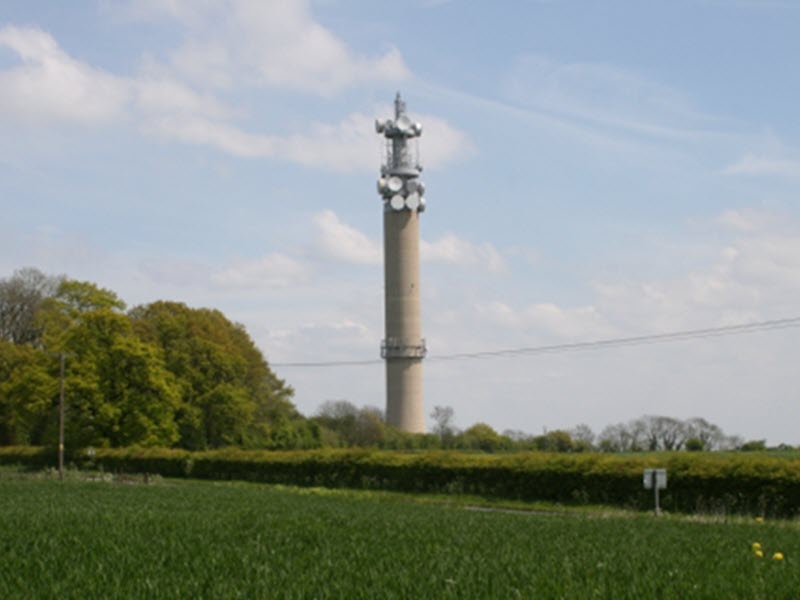
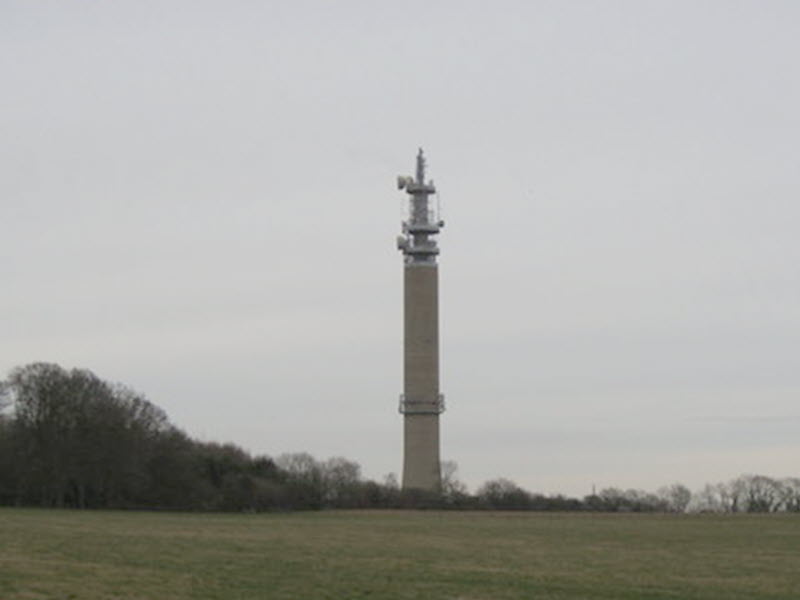
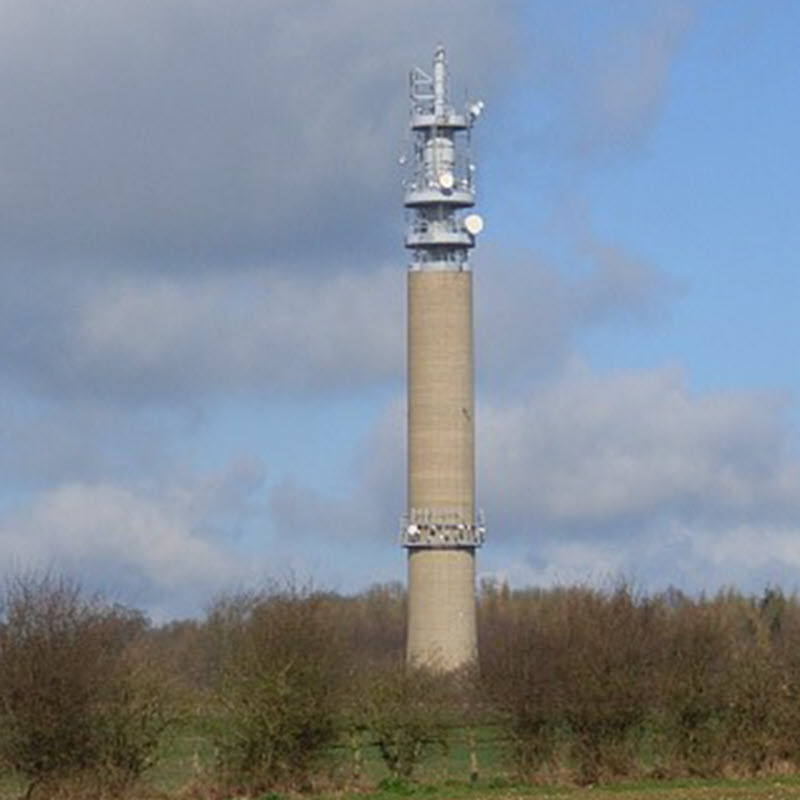
The progression from empty tower to the full set of analogue antennas and subsequent use and decline of digital links can be seen in the archive photos. It is not yet confirmed whether the new-style dishes apparently facing Charwelton were part of the BT digital network.=