History
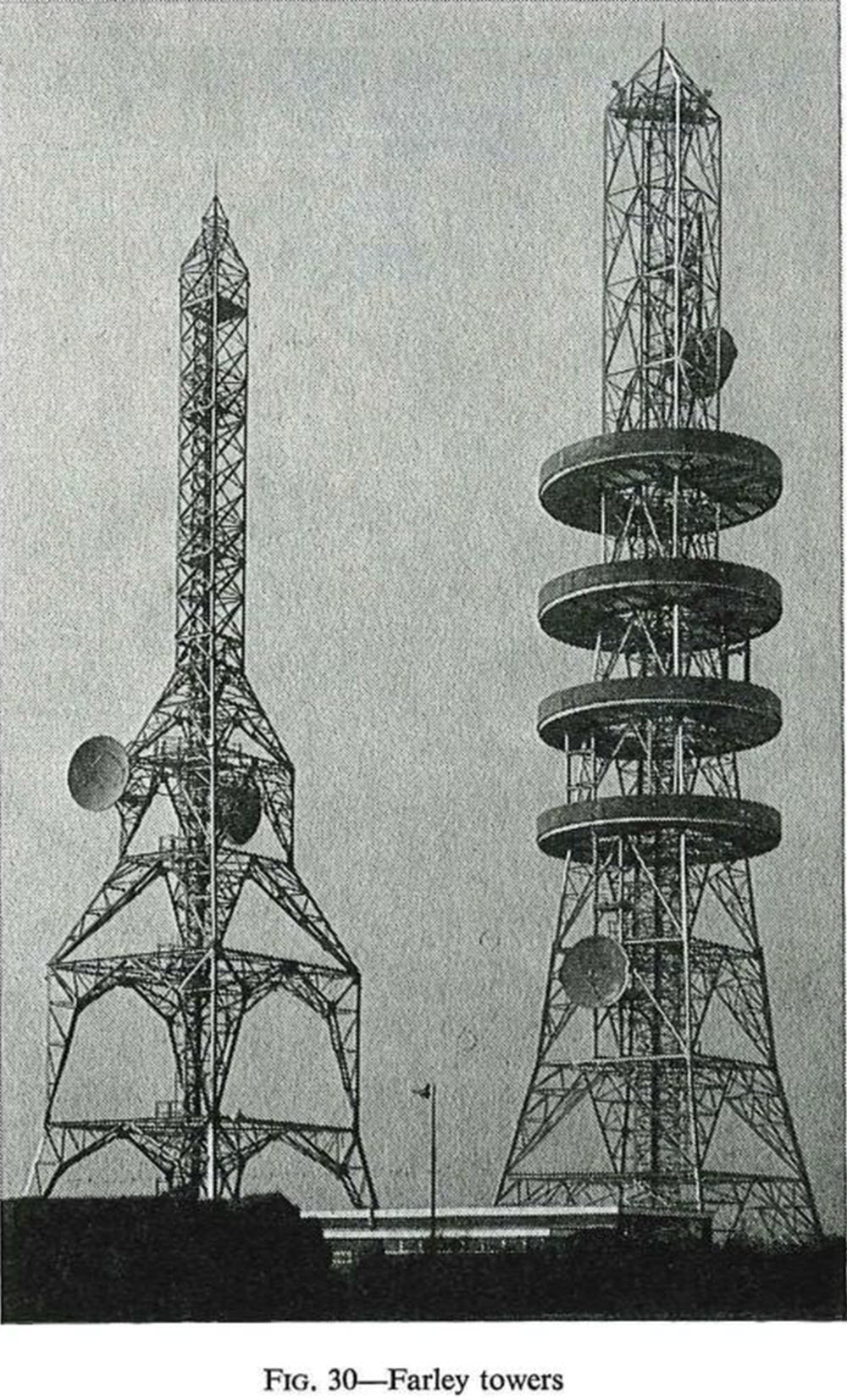
Probably named after nearby Farley Wood, Farley entered service in 1968 as part of the London - Leeds route. As an intermediate site with "standard tower" and building of the usual design there should have been nothing particularly remarkable here. Unfortunately issues were found once the site became operational and led to the tower being replaced within a few years.
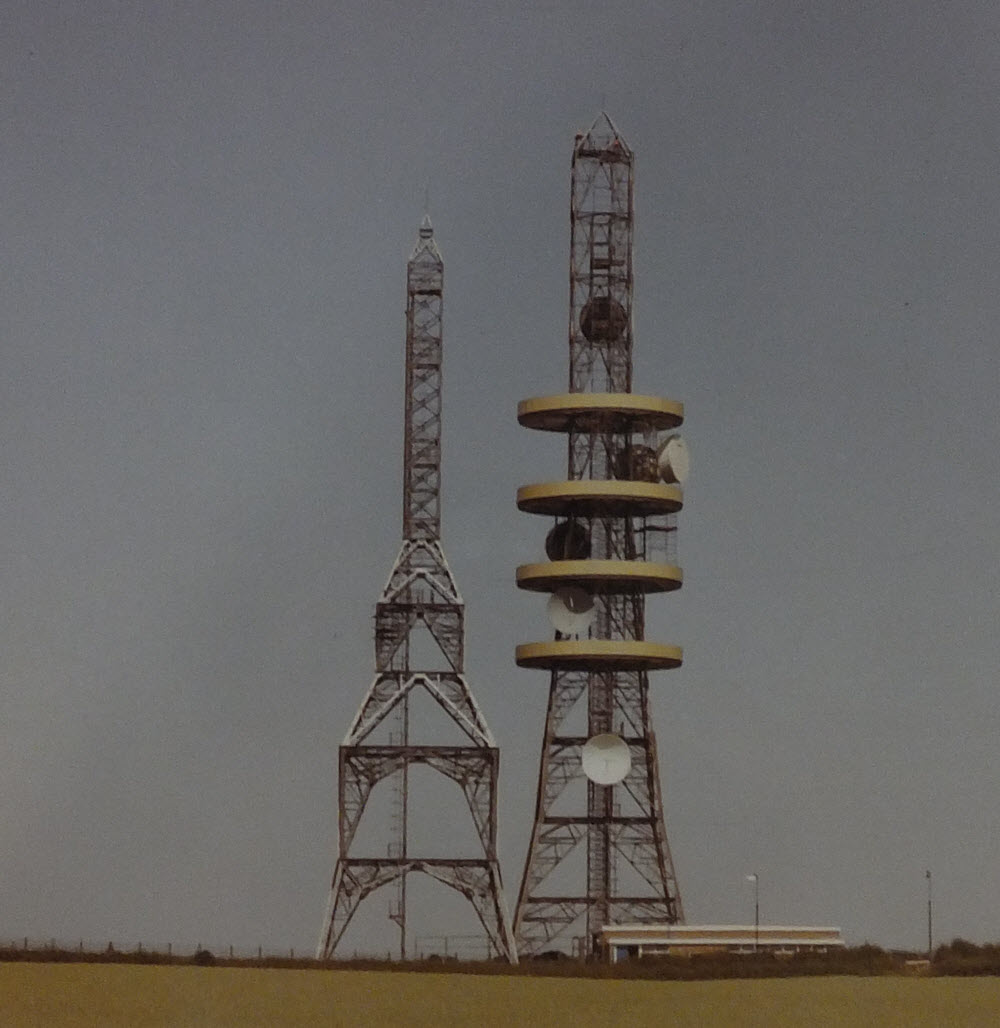
A planning application in 1970 sought approval for the original tower to be partially dismantled and rebuilt to a greater height - this was potentially possible with the "kit of parts" design. A temporary mast would be used to maintain service while the work was carried out. At this stage only one dish would have been required in each direction. The reason for the modification was explained as the poor performance between Farley and Upton: it seems the final position of the two sites was determined after the steelwork for the towers have been ordered based on earlier plans. The intended rebuild attracted the attention of the local authority and a protracted period of negotiation followed.
An article in the Post Office Electical Engineers' Journal, July 1974 (Volume 58, Part 4, page 105) comments on tests carried out at Farley where the tower was "said to be excessively flexible by staff working on the upper 8 ft square, parallel-sided section. As a result [...] a loading limitation had been placed on the tower ...".
The planning files show discussion of how a new tower could be of a different design which would be a "feature" of the landscape, given that it was not possible to be unobtrusive. The Post Office agreed to install a relatively slim square tower with circular "galleries". These were fitted with GRP panels in an agreed British Standard "mustard" colour. The POEEJ article reports the new design was effectively a prototype for possible use where the then preferred "Type 5A" modular tower was unsuitable. In practice no further towers were built to this pattern although similar structures, without galleries, were used at sites added during the mid to late 1970s. At Farley the "lines of shoot" to the adjacent sites did not particularly require the flexibility of a galleried tower and some dishes were supported directly from the main struture rather than via the gallery platforms.
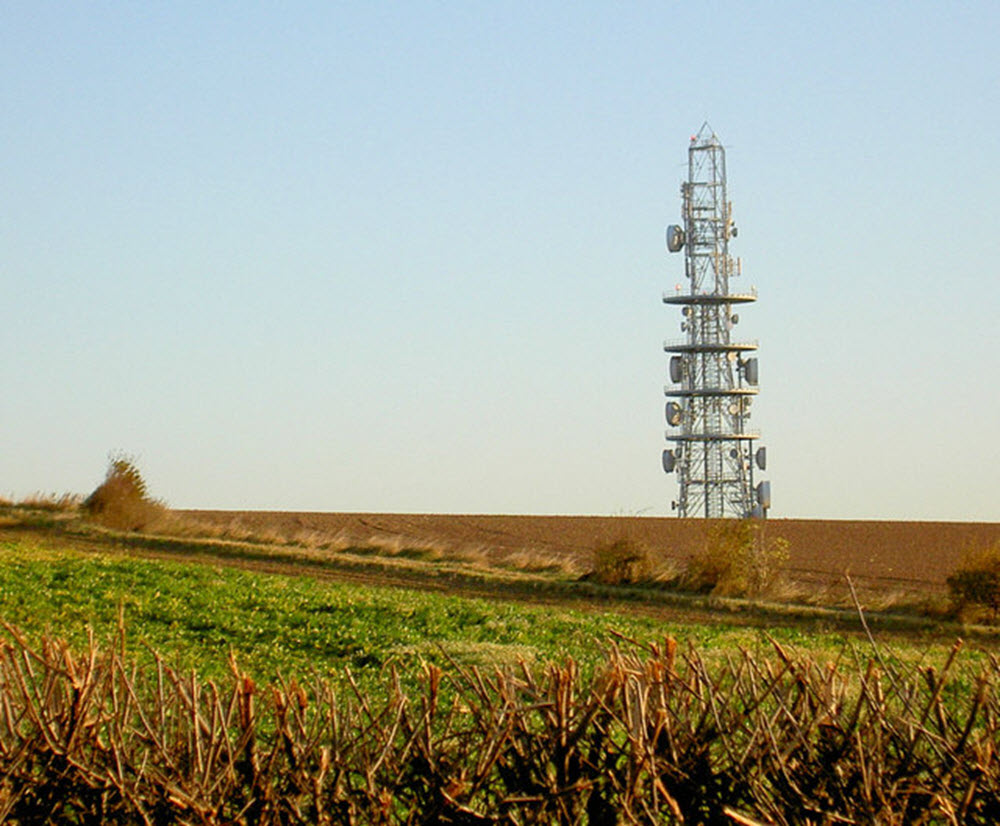
After a "shaky start", Farley fulfilled its planned role with further dishes added as the London - Leeds route expanded. Following re-organisation of ITV regions the nearby Belmont transmitter was transferred to Yorkshire TV in 1974 and a new vision circuit from Leeds provided via Farley. Links were added for the BBC channels during 1978 and for Channel 4 in 1982. Channel 4 moved to a new distribution network in 1993 and the BBC transferred to other arrangements in 1995 but the ITV feed may have remained operational. We understand the main links (by then migrated to digital systems) were taken out of service by 2007. The dishes were removed at some point between August 2009 and April 2010.